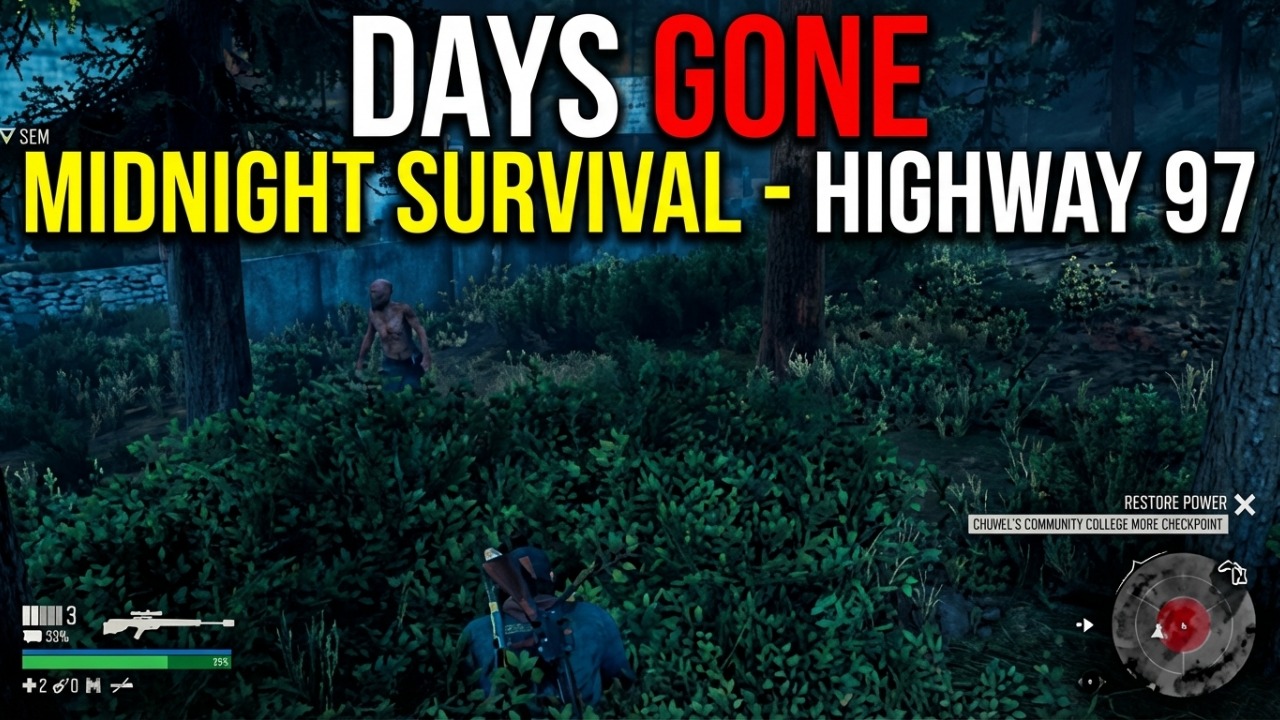
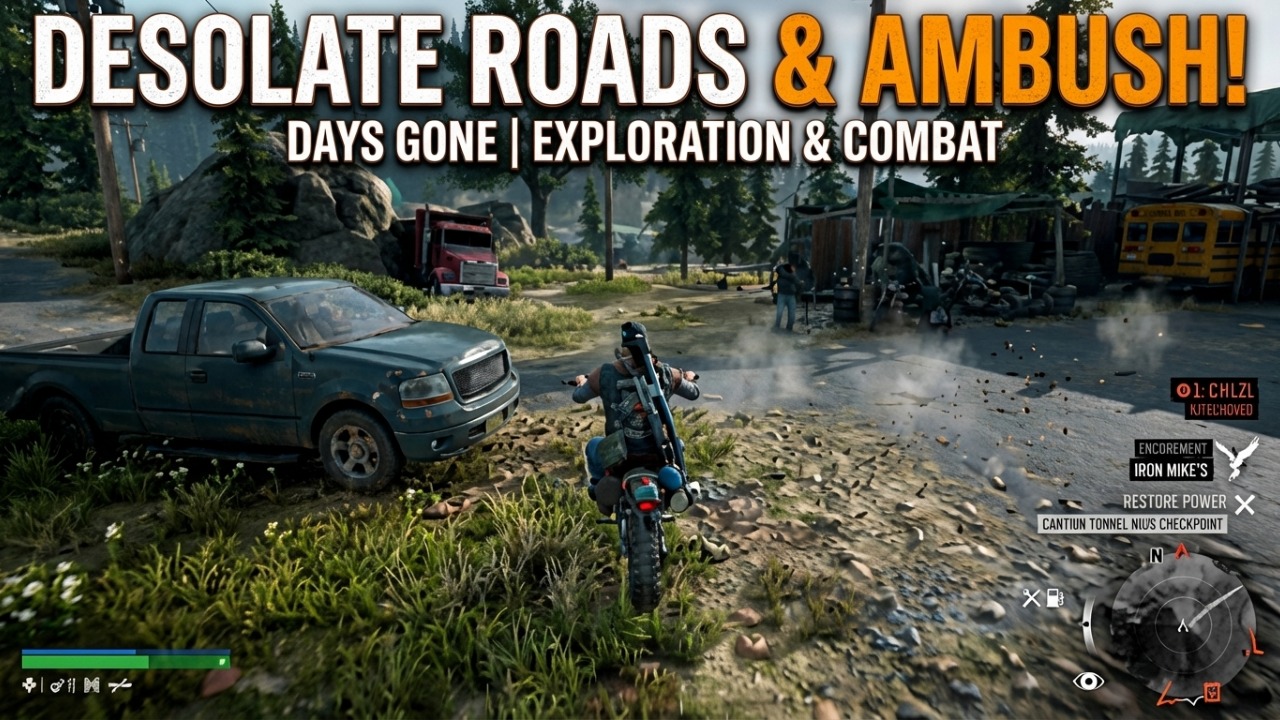
Days Gone Stealth Guide: Mastering the Train Track Ambush Camp
Master the shadows of the Oregon wilderness with our deep-dive guide into clearing the Train Track Ambush Camp in Days Gone. Learn professional stealth tactics, distraction techniques, and combat transitions to survive the apocalypse.
In the brutal world of Days Gone, the difference between survival and a shallow grave often comes down to how much noise you make. While Deacon St. John has access to an impressive arsenal of firearms, charging into an Ambush Camp with guns blazing is a quick way to get surrounded and overwhelmed.
Clearing the Train Track Ambush Camp requires a delicate touch, patience, and a mastery of the game’s stealth mechanics. In this guide, we break down a high-level tactical approach that transitions from afternoon scouting to a rain-soaked nighttime finale. Whether you are a newcomer to the Oregon wilderness or a veteran looking to refine your takedowns, this walkthrough provides the ultimate blueprint for silent efficiency.
Phase 1: Scouting and Initial Approach
Success in Days Gone starts long before the first blade is drawn. When approaching the Train Track Ambush Camp, your primary goal is information gathering.
At , the approach begins in the late afternoon. This is the ideal time to utilize your binoculars to mark enemies. Marking targets is essential because it allows you to track enemy movement patterns through walls and foliage, preventing you from being flanked.
The Importance of High Ground
Always approach from an elevated position or thick brush. The perimeter of this camp is heavily guarded, and a direct approach via the tracks is suicide. Use the natural topography to stay out of the sightlines of snipers and lookouts. At , you can observe the first tactical kill—neutralizing a lone guard near the outskirts to create a safe entry point into the tall grass.
Phase 2: Systematic Stealth Takedowns
Once you have penetrated the outer perimeter, the real work begins. At , the focus shifts to systematic takedowns. The key here is isolation. You want to pick off guards one by one without alerting their comrades.
Using Distractions
In Days Gone, rocks are your best friend. By throwing a rock, you can force an enemy to investigate a specific location, turning their back to you. This is showcased effectively at , where a guard is lured away from his post, allowing for a silent melee execution.
Pro-Tip: Always loot the bodies immediately. Guards often carry crafting materials or ammunition that you will need for the later stages of the mission.
Phase 3: Transitioning to Nighttime Operations
As the sun sets, the tactical landscape changes. At , the mission transitions into nighttime. While darkness makes it harder for you to see, it significantly reduces the enemy's vision range.
Environmental Advantages
Nighttime in the high desert often brings weather changes. At , a heavy rainstorm begins to roll in. In Days Gone, rain is a stealth player’s greatest asset. The sound of falling rain masks the noise of your footsteps, allowing you to crouch-sprint closer to enemies than you would be able to in clear weather. Use this window of opportunity to clear the wider perimeter and move toward the heart of the camp.
Phase 4: Neutralizing the Central Structures
The difficulty spikes as you reach the central structures. This area is more densely packed with hostiles who are often within sight of one another.
Starting at , the strategy evolves. You can no longer rely solely on bushes; you must use the camp’s architecture—crates, barrels, and walls—as cover. Movement here must be deliberate. Watch for the 'Detection Meter' above an enemy's head. If it starts to fill, freeze or move immediately into a blind spot.
By , the number of hostiles is significantly reduced, but the remaining enemies are usually the most dangerous, often including 'Heavies' or snipers positioned on rooftops.
Phase 5: The Final Firefight
Even the best-laid plans can lead to an open confrontation. At , the stealth approach concludes as the remaining hostiles are cornered. When you are down to the last few enemies, the tactical advantage of stealth is replaced by the necessity of overwhelming force.
Combat Tactics
At , the use of Molotov cocktails and focused gunfire is demonstrated to clear out the final holdouts.
- Use Explosives: If enemies are bunched up near the central trailer, a well-placed grenade or Molotov can end the fight instantly.
- Stay Mobile: Even in a firefight, don't stand still. Use the 'Roll' mechanic to dodge incoming fire and reposition yourself behind cover.
By , the last hostile is neutralized, and the camp is officially cleared.
Phase 6: Post-Combat Investigation and Looting
Clearing the enemies is only half the battle. To truly 'complete' an Ambush Camp, you must find the underground bunker. At , the process of resource gathering and searching for the hatch begins.
Why Bunkers Matter
Finding the bunker in an Ambush Camp is critical because it:
- Clears the Fog of War: Reveals nearby points of interest on the map.
- Provides Crafting Recipes: Often contains new recipes for explosives or medical supplies.
- Acts as a Fast Travel Point: Allows you to navigate the world more safely.
At , the mission concludes with Deacon gathering the final pieces of Intel, marking the Train Track Ambush Camp as a conquered territory.
Key Takeaways for Survival
- Patience is a Weapon: Spend at least two minutes scouting with binoculars before moving in.
- Rock Distractions: Use rocks to manipulate enemy AI and create openings for takedowns.
- Weather Awareness: Use rain and storms to mask your movement noise.
- Bunker Search: Never leave a camp without finding the underground bunker and its map.
Mastering these stealth techniques will turn Deacon St. John from a drifter into a legendary predator of the Oregon wastes.
Ready to take on the next camp? Keep your blades sharp and your footsteps light. For more Days Gone guides and tactical breakdowns, subscribe to our newsletter and stay tuned to the latest updates!